
East Fishkill City Directory Shelf
The documented shelf is regional and uneven. The strongest confirmed leads are a digitized 1866 Fishkill volume, a Dutchess County directory from 1895–96, two Beacon, Fishkill and Glenham runs from the 1920s, and a 1950–51 Beacon telephone directory. Their titles matter. A Fishkill, Beacon, or telephone heading does not make every entry an East Fishkill household. Check the printed locality, road, hamlet, and date before connecting a result to the town.
| Collection | Years | Where Held | Access |
|---|---|---|---|
| Historical sketch and directory of the town of Fishkill, T. Van Wyck Brinckerhoff | 1866, 149 pages | FamilySearch catalog, identifier 2834299 | Digitized catalog and image viewing |
| Dutchess County Directory | 1895–96 | Dutchess County Historical Society Book Locator | Confirm title and item access with the repository |
| Beacon, Fishkill and Glenham Directory | 1922–23 and 1924–25 | DCHS Book Locator | Regional directory lead; check locality line |
| Beacon Telephone Directory, New York Telephone Company | 1950–51 | DCHS Book Locator | Subscriber and address lead, not an occupancy roll |
No source reviewed confirms a complete printed East Fishkill city-directory run, an exhaustive Polk shelf, or a verified reverse directory for every year. The DCHS locator makes the known items actionable, including shelf code F:127:D8, but a catalog hit is not a promise that every road or household appears.
Separate collection evidence from person evidence. The FamilySearch catalog establishes title, creator, page count, and identifier. The DCHS rows establish regional titles and years. Neither source establishes that a particular person appears, that an address is in present-day East Fishkill, or that a printed household was the legal owner. Those questions require the actual page, locality context, and a separate dated property or vital record where appropriate.
East Fishkill's 1866 Directory Lead
The earliest identified directory-style source is the 1866 Historical sketch and directory of the town of Fishkill. Its catalog record names T. Van Wyck Brinckerhoff, describes a 149-page work, and supplies FamilySearch identifier 2834299. The city directory lead is regional, especially when an old reference says Fishkill, but the captured research did not verify a named East Fishkill entry from its pages.
FamilySearch's catalog record for the 1866 Fishkill volume provides the digitized source.
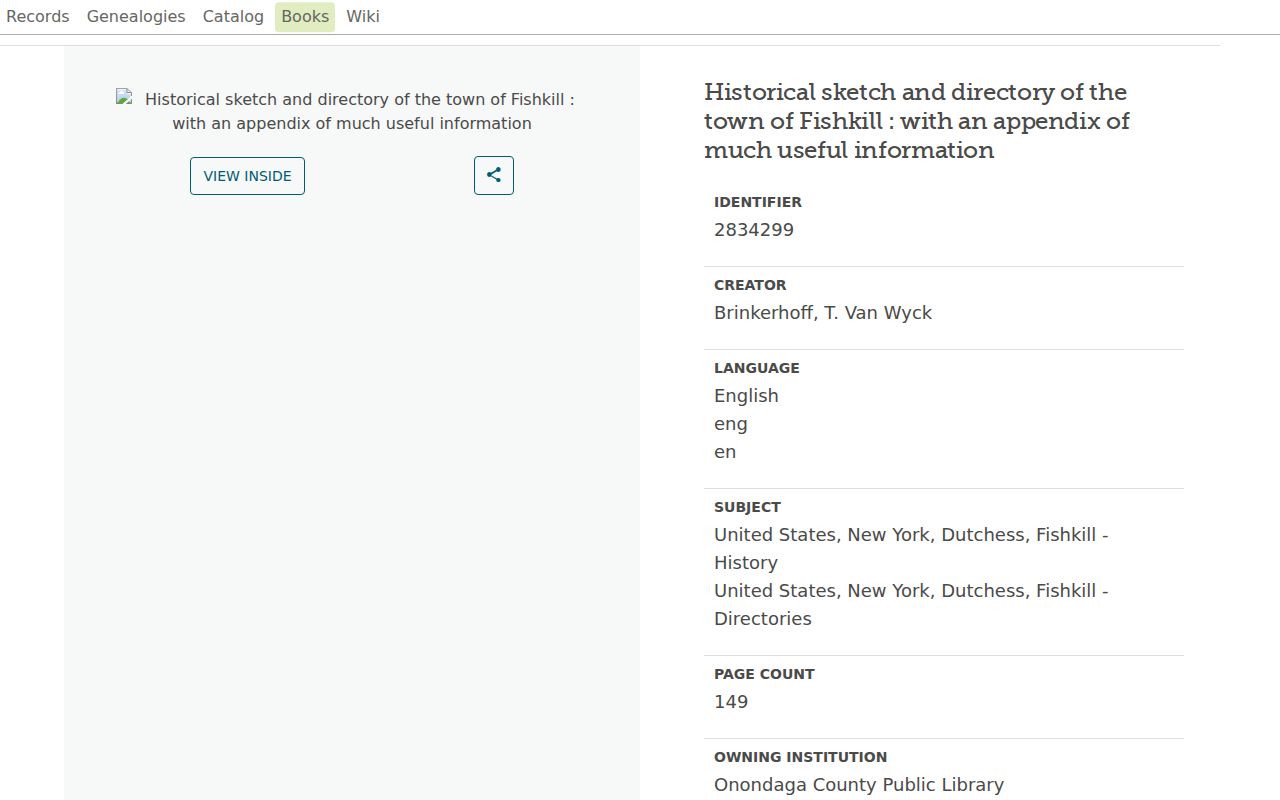
Record the title-page wording, image or page number, and locality exactly as printed. The catalog proves that the volume exists and is digitized; it does not turn a regional title into a searchable list of all East Fishkill residents.
East Fishkill Regional Directory Years
The 1922–23 and 1924–25 Beacon, Fishkill and Glenham books are separate dated sources, not one continuous directory. Search each edition independently, using a surname spelling, a spouse or business wording where printed, and a hamlet label such as Hopewell Junction. The 1950–51 telephone directory adds a later subscriber clue. A missing phone listing can mean an unlisted line, a shared line, or no subscription, not that a household was absent.
For 1895–96, the Dutchess County directory is another county-level lead. Keep the source title beside the transcription. That small habit preserves the difference between an exact East Fishkill address, a Fishkill-area reference, and a nearby municipality with the same postal vocabulary.
Reading East Fishkill Directory Listings
Each printed listing is dated evidence, so transcribe only what the page shows. Some books may have a name, occupation, road, hamlet, telephone line, or business note; others omit most of those details. Do not supply a modern street number, household relationship, owner mark, or occupation when the original entry does not print it.
| Printed name | Copy initials, spelling, suffix, and household wording exactly as shown. |
|---|---|
| Address or locality | Keep the road, number, hamlet, or post-office label; compare postal and civil geography later. |
| Business or phone line | Use it as a dated contact or subscriber lead, never as proof of present residence. |
| Year and imprint | Identify when and for what geography the listing was published. |
| Page or image | Make the finding reproducible at the repository or digital collection. |
- Criss-cross directory
- An address-ordered section, when a volume actually includes one. It can point from a road and number to a printed occupant.
- Householder index
- A name index organized around household listings. It is not proof that every person at an address was indexed.
- Abbreviation key
- The volume's own explanation of shortened words and marks. Photograph or copy it before interpreting an unfamiliar entry.
East Fishkill Directory Boundary Check
Jurisdiction is part of the search. East Fishkill separated from Fishkill on November 29, 1849, and the original East Fishkill map, FM No. 117, was filed with the Dutchess County Clerk on July 22, 1850. A historical result labeled Fishkill may be relevant, but its date, road, hamlet, and boundary must be checked before it is assigned to modern East Fishkill.
- Before 1849: search Fishkill jurisdiction terms and preserve the place name used in the source.
- 1850: use the filed map as an early boundary and road reference.
- 1866: treat Brinckerhoff's Fishkill title as a regional directory source.
- 1895–1951: compare each DCHS directory or telephone lead with locality and road evidence.
- Later years: fill gaps with newspapers, deeds, and other dated records.
Note: A geographic title and a postal label are different evidence fields; neither substitutes for the actual locality printed beside the entry.
The 1850 map is useful when an older road or boundary seems out of place in a later volume. Compare its roads and bridges with the printed locality, then with a modern parcel or deed description where the question concerns land. The map supports geographic interpretation, while the legal parcel and recorded instrument remain the evidence for title. Keeping those roles separate prevents an attractive historical map from being used as an ownership record.
East Fishkill Directory Gaps in Newspapers
When directory years are missing, local newspaper holdings can be more useful than guessing that a national directory included a rural road. The New York State Library lists fragments of the Fishkill Journal, a 1882–1918 run of the Fishkill Weekly Times, a fragmentary Hopewell Junction Bugle, 1960s East Fishkill Record fragments, and repository-specific runs of the Southern Dutchess News from 1967 forward. Search notices, probate advertisements, marriages, deaths, road proceedings, and business advertisements.
East Fishkill Community Library is a local place to begin a request for newspaper, microfilm, scanning, copying, or directory guidance.
The library is at 348 Route 376 in Hopewell Junction and reports broad local service capacity, including computers, scanning, copying, databases, and Mid-Hudson access. Its public pages do not confirm an exhaustive city-directory shelf or a searchable local obituary index, so ask staff about a particular title or date.
For the strongest newspaper note, retain the paper title, issue date, page, repository, spelling, and locality printed in the item. A notice can supply a date for a death, estate, road, or business event, but a fragmentary run has gaps. Search both the historic Fishkill label and the Hopewell or East Fishkill label before deciding that a name is absent.
East Fishkill Directory Research at Blodgett
For Fishkill-area material, Blodgett Memorial Library's Local History Room is a documented supplement. Its described holdings include books, Dutchess County Historical Society yearbooks, manuscripts, genealogies, photographs, maps, pamphlets, and local newspapers. Reported newspaper runs include the Fishkill Journal, Fishkill Weekly Times, and Southern Dutchess News, plus the Rapalje/Cotheal manuscript volumes with transcribed mortgages, deeds, wills, letters, and journals.
Blodgett Memorial Library's local-history information explains the research setting and access route.
East Fishkill Historical Society provides a separate local-history and material-culture reference point.
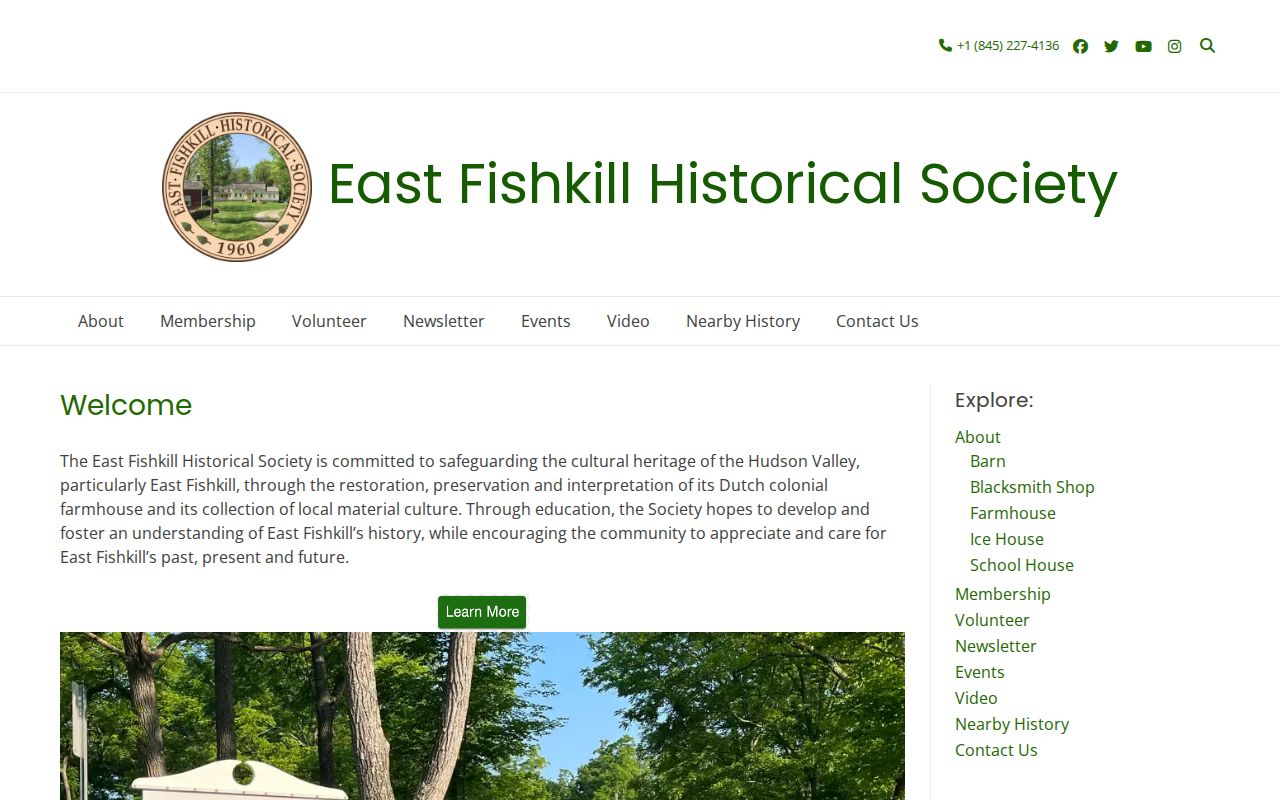
Blodgett's collection is closed. Its guide describes access for an exact known item and additional Thursday evening or appointment access, while the current page directs researchers to arrange a visit. The Historical Society is a context or referral route, not a public name-search database.
Trace an East Fishkill City Directory Household
Build a dated chain instead of treating one printed line as a conclusion. Begin with a known name or road, save the directory year and page, then compare the preceding and following verified volumes. Pair the printed address with the nearest released census year and with deed or assessment evidence only after checking whether the civil boundary and street naming match.
- Search the known surname, spelling variants, road, and hamlet in the closest verified directory year.
- Copy the title, publisher, edition year, printed locality, page or image, and every field actually shown.
- Check the next available regional directory and newspaper notices for an address change, estate clue, or changed household wording.
- Use a census, probate, vital-record, or deed custodian for the separate question that source can answer.
- Mark a gap as a gap when a volume, road, phone line, or entry is absent.
Disappearance from a dated listing can reflect a move, death, an unlisted telephone, a rural address, a changed locality label, or a missing edition. It is a reason to search another dated source, not proof of any one explanation.
Limits of East Fishkill City Directories
Catalog, image, and index are not interchangeable. FamilySearch may show a catalog record or images without a searchable East Fishkill transcript. A DCHS locator establishes that a title is held, not that it is digitized or includes every road. Newspaper holdings can be a fragment, microfilm, or print run with repository-specific dates. Preserve whether a finding came from a catalog, image, index, or staff-assisted request.
Use city directories for family history, address history, estate research, and reconnecting a dated local record to its original source. For ownership, consult the parcel and deed record; for an official vital event, use the appropriate registrar or state custodian. Each record type answers a different question.